

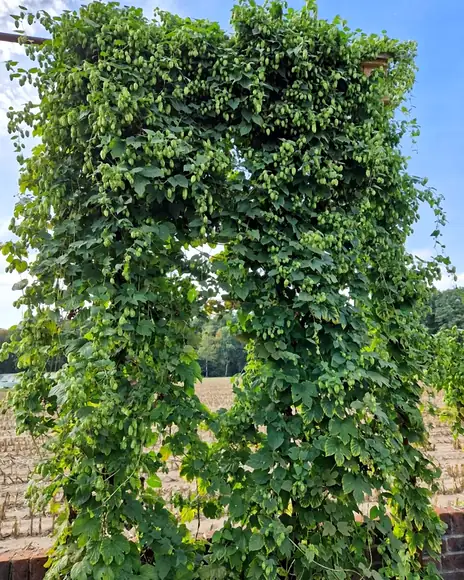

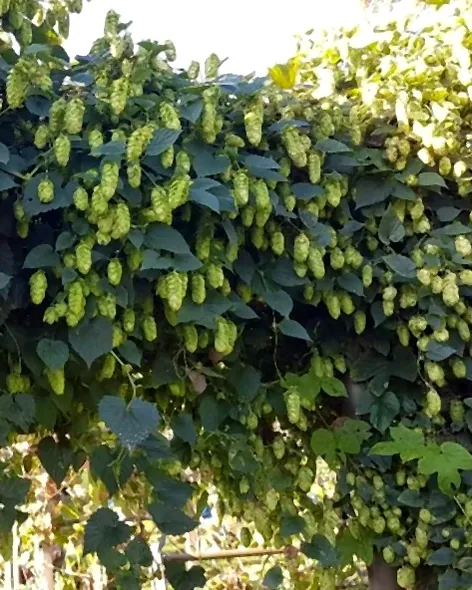
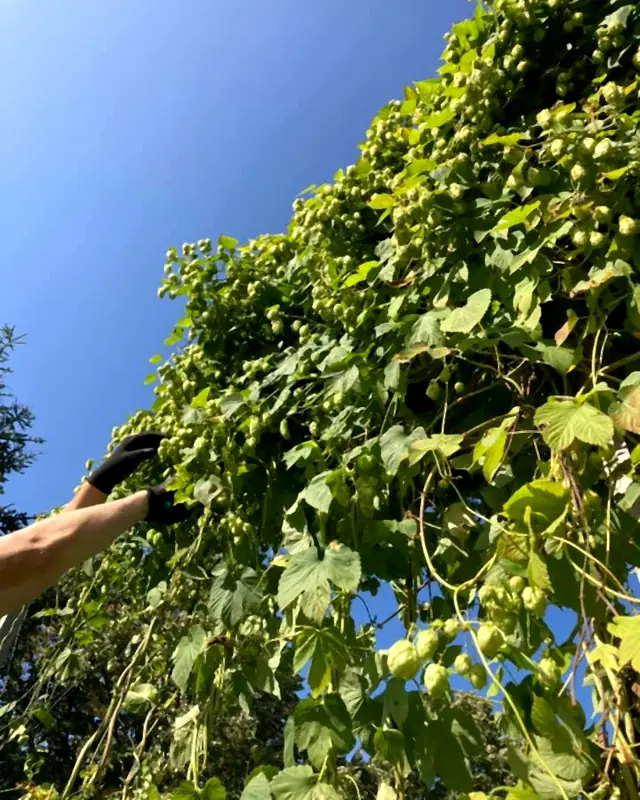

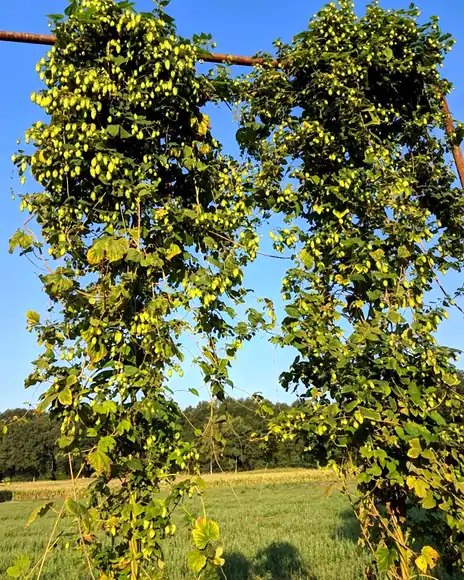


The Chinook hop variety
Chinook is an American hop released in 1985. It comes from a cross between Petham Golding, an English hop, and a USDA male hop.
It is used for bitterness as well as aroma, at every stage of the boil: notes of pine, spice and grapefruit. It is found in Pale Ales and IPAs, but also in porters, stouts, winter ales and Barley Wine.
| Alpha acids | 12 to 14% |
|---|---|
| Beta acids | 3 to 4% |
| Cohumulone (share of alpha) | 29 to 34% |
| Essential oils | 1.5 to 2.7 ml/100 g |
| Yield | 1,700 to 2,230 kg/ha |
Source: Chinook data sheet on ListeHoublon.fr, our directory of hop varieties.
Why choose a one-year-old bare root?
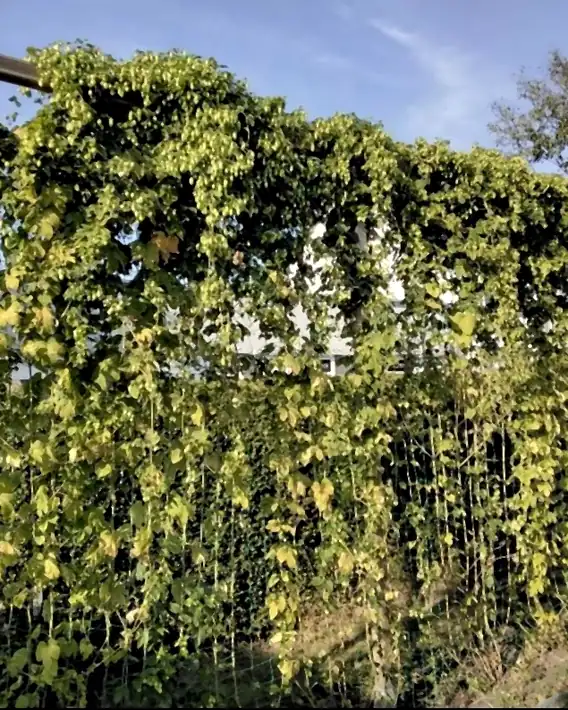
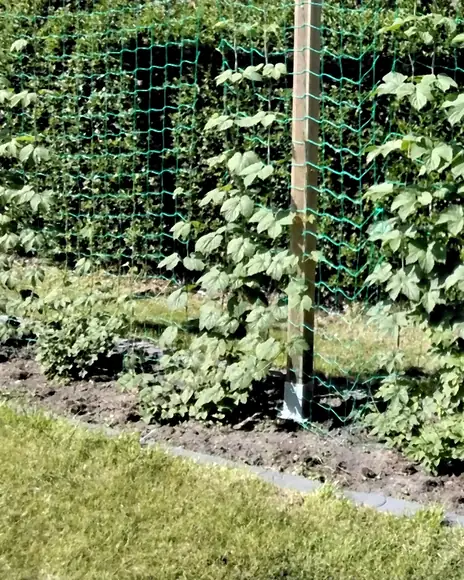
Produced by vegetative or in vitro propagation, this female plant was first grown in a pot, then matured in open ground. It is delivered without soil, with a root system of 20 to 35 cm. It withstands several weeks of cold storage (2 to 4 °C) and, if planted in autumn, resists frost. Planted well, it can bear cones in its first year and reaches full yield in the second. It is the form most professionals choose to set up a hop yard.
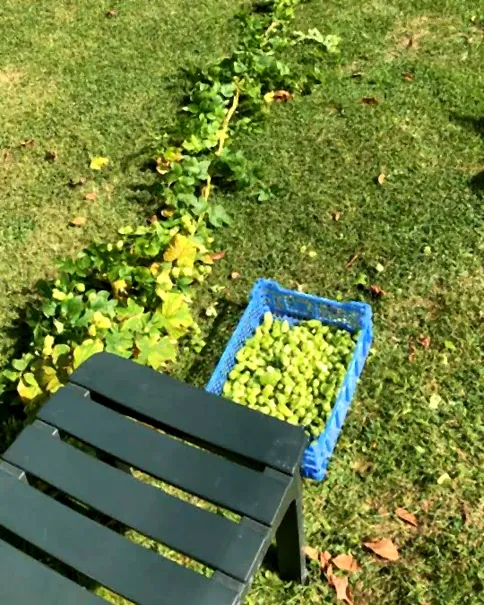
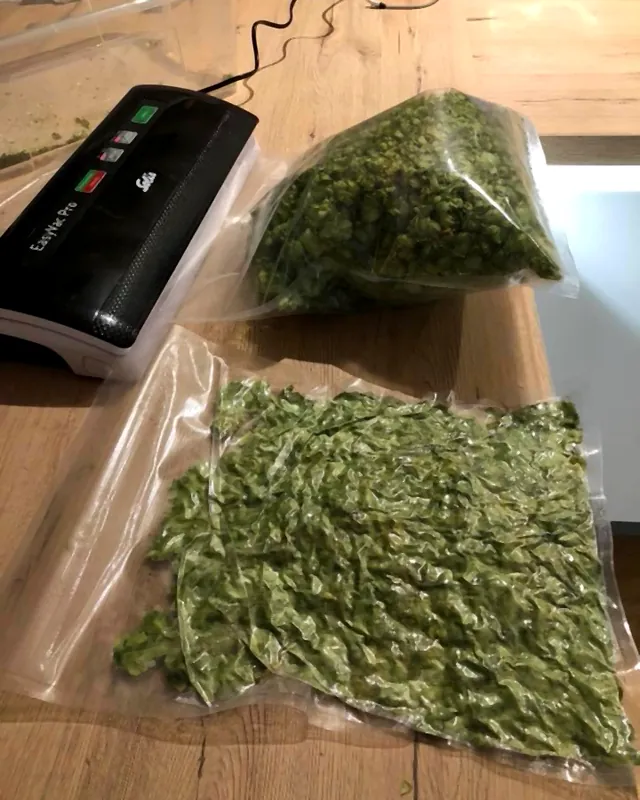
Its cones are used for brewing, herbal tea or decoration. For easier planting, also try our potted hop plants.